
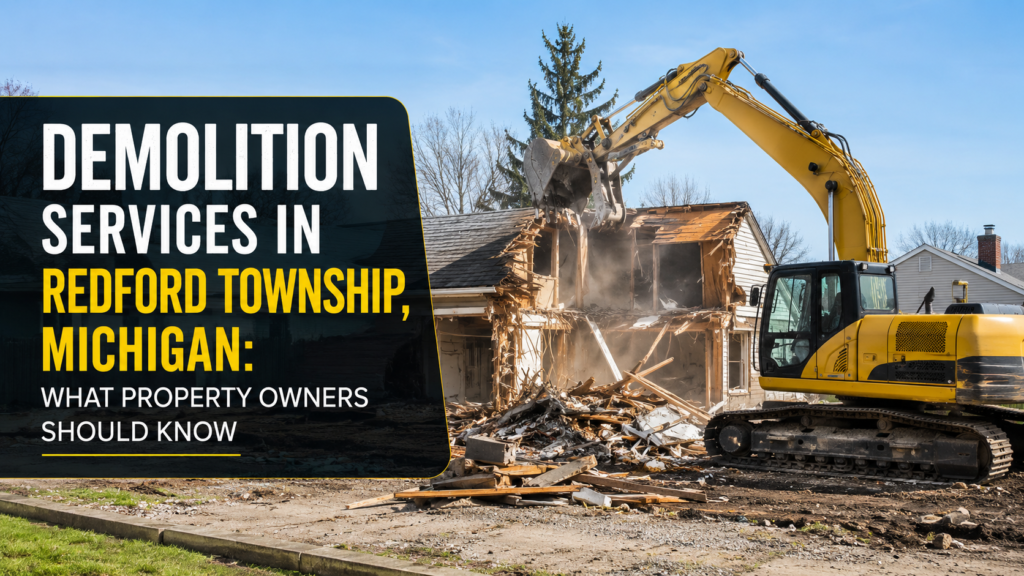
Redford Township sits along the western edge of Detroit in Wayne County, made up largely of post-war residential neighborhoods along with small commercial strips scattered throughout the community. Because much of the housing stock dates back several decades, demolition needs in the township often center on aging homes, garages, and small commercial buildings that have reached the end of their useful life. This guide explains what property owners should understand about the Demolition Contractor Redford Township process.
Typical Demolition Projects in the Township
Common demolition work in Redford Township includes full residential teardowns, particularly for homes that have deteriorated beyond the point of cost-effective renovation, as well as removal of detached garages and small outbuildings. Small commercial and retail structures along the township’s main corridors are also periodically demolished to make way for redevelopment or to address vacant, deteriorating buildings.
Because Redford Township sits directly along Detroit’s border, some of these projects are part of coordinated improvement efforts that span both municipalities, particularly along shared corridors where blight on one side of a boundary line can affect the other.
Assessing the Structure and Site
Every demolition project starts with an assessment of the structure’s condition and the surrounding site. For older or vacant properties, this assessment often includes checking for structural instability, prior fire or water damage, and any signs of pest infestation, all of which can affect how the demolition is approached and what safety precautions are needed.
For homes located along the township’s border with Detroit, the assessment may also factor in proximity to adjacent properties in a different municipality, since coordinating with neighboring jurisdictions is occasionally necessary depending on where a lot line falls.
Permits and Utility Disconnection
A demolition permit from the township is generally required before any structural work can begin. Utility disconnection is a required step as well, ensuring gas, electric, and water service is safely capped before demolition starts. For long-vacant properties, this step sometimes involves additional coordination if utility records need to be updated or verified with the service provider.
Checking for Hazardous Materials
Because a large share of Redford Township’s housing stock was built in the mid-20th century, a hazardous materials survey is a standard part of pre-demolition planning. This typically checks for asbestos in siding, insulation, or flooring materials, along with other substances that require special handling. Vacant or long-neglected properties may also need a broader inspection to identify any additional hazards before crews begin work.
In some cases, older accessory structures like detached garages or sheds also warrant a hazardous materials check, particularly if they include roofing or siding materials that match the era of the main house.
How Demolition Is Carried Out
Once the site has been assessed, permitted, and cleared of hazardous materials, mechanical demolition is typically used to remove the structure efficiently. Debris is sorted on-site into categories such as wood, metal, and concrete to support recycling efforts. For properties where certain materials are being salvaged, a more selective approach may be used before the remaining structure is brought down.
Addressing Vacant and Deteriorated Properties
Redford Township, like many older Wayne County communities, includes some properties that have sat vacant for extended periods. These structures often require additional precautions during demolition, including careful assessment for structural instability and more thorough debris removal given the potential for accumulated waste or deterioration inside the building.
In some cases, a vacant property may have experienced unauthorized entry or scrapping of building materials over time, which can create additional hazards, such as exposed wiring or compromised framing, that need to be accounted for before crews begin work.
Site Cleanup and Grading
After the structure and debris are removed, the lot is graded to ensure it is level and drains properly. This step is particularly important for vacant lots that may eventually be redeveloped, sold, or maintained as open space by the township or a future property owner.
In some cases, township code enforcement will follow up after a demolition project is complete to confirm the lot meets local maintenance standards, so ensuring the final grading and cleanup is thorough can help avoid follow-up issues down the road.
What Affects Project Timelines
Project timelines depend on the size and condition of the structure, whether hazardous materials are present, and current permitting turnaround with the township. Vacant or deteriorated properties can sometimes take longer to plan for, given the additional inspection steps involved and the extra care required around potentially unstable framing.
Signs a Structure May Be Beyond Repair
Given the age of much of Redford Township’s housing stock, a few structural indicators commonly point toward demolition rather than renovation. These include significant foundation settling, extensive water damage that has compromised framing, long-term pest activity in structural components, and roof failures that have caused prolonged moisture intrusion throughout the building. Vacant properties in particular often show accelerated deterioration compared to occupied homes, since ongoing maintenance and climate control are no longer in place to slow the process.
Mechanical Demolition vs. Selective Deconstruction
Most demolition projects in Redford Township, particularly full teardowns of severely deteriorated homes, use mechanical demolition equipment for an efficient removal. In cases where a homeowner or contractor wants to preserve specific materials or fixtures before a structure comes down, a more selective, hand-based deconstruction approach may be used for at least part of the process, allowing salvageable items to be set aside before mechanical equipment finishes the remaining structure.
How Seasonal Weather Affects Scheduling
Michigan’s seasonal weather patterns affect demolition scheduling in Redford Township much as they do elsewhere in Wayne County. Frozen ground during winter months can complicate excavation and site grading, which is why many larger projects are scheduled for the spring through fall months when conditions are more predictable and equipment access is generally easier to manage.
Coordinating With the Township on Blight Removal
Redford Township, like many older Wayne County communities, has ongoing programs aimed at addressing blighted and unsafe properties. Property owners dealing with a deteriorated structure sometimes coordinate directly with township code enforcement or building departments as part of the demolition process, particularly if a property has been cited for code violations. Understanding these local requirements ahead of time can help streamline the permitting process.
Demolition Along the Township’s Commercial Strips
In addition to residential work, Redford Township includes several small commercial strips where aging retail or office buildings periodically require demolition. These projects tend to be smaller in scale than what is seen in larger commercial corridors, but they still require the same core steps: a structural assessment, permitting, utility disconnection, and a hazardous materials review before work can begin.
What Happens on Demolition Day
Once permitting, utility disconnection, and any needed hazardous material abatement are complete, the physical demolition itself is typically the fastest part of the overall project. For a single-family home, crews often complete the main structural teardown within a day, followed by debris sorting and hauling. Vacant or long-deteriorated structures sometimes require additional time on-site due to the extra care taken when working around unstable framing or accumulated debris inside the building.
After the Structure Comes Down
Following the main demolition, remaining steps include foundation removal, backfilling the excavation with suitable fill material, and confirming that utility connections have been properly capped below grade. Final grading levels the lot and ensures proper drainage, which matters whether the property will be redeveloped, sold, or simply maintained as a stable vacant lot by the township or a private owner going forward.
Frequently Asked Questions
Do I need a permit to demolish a home in Redford Township? Yes, a demolition permit from the township is required before structural work can begin.
How are vacant properties handled differently during demolition? They often require a more thorough structural and hazard assessment given the potential for deterioration or accumulated debris inside the building.
What happens to materials removed during demolition? Recyclable materials like wood, metal, and concrete are typically sorted on-site, with the remainder taken to an approved disposal facility.
Is asbestos testing required before demolition? A hazardous materials survey is standard practice for older homes, particularly those built before the 1980s, to identify materials like asbestos before work begins.
How long does it take to demolish a single-family home? The physical demolition often takes just a few days, though permitting, utility disconnection, and hazardous material review can extend the overall project timeline.
What happens to a lot after a home is demolished? The lot is graded and leveled, after which it can be maintained as open space, sold, or prepared for future construction depending on the owner’s plans.
Are there differences in permitting for a home versus a small commercial building in the township? Yes, commercial demolition typically involves additional review related to the building’s size and prior use, whereas residential permitting tends to follow a more standardized process.
Residents comparing options can look into a demolition contractor serving Redford Township to better understand how the process works for the township’s mix of established residential blocks and small commercial properties.